How Hplc Is Made Use Of To Examine Peptide Purity Identification confirmation verifies the particular secretagogue being studied. Peptides like BPC-157 and TB-500 used for injury recuperation applications must get complete verification. Identity confirmation is essential because replacement with different substances would fundamentally alter the research study approach. The screening process includes certain steps to make sure accurate results and correct sample handling. For these high-stakes circumstances, the price of testing is trivial contrasted to possible consequences of using unproven items. For researchers adhering to protocols from sources like the BPC-157 and TB-500 piling guide, verified item quality makes sure the protocol obtains a fair examination.
Identity Confirmation Screening
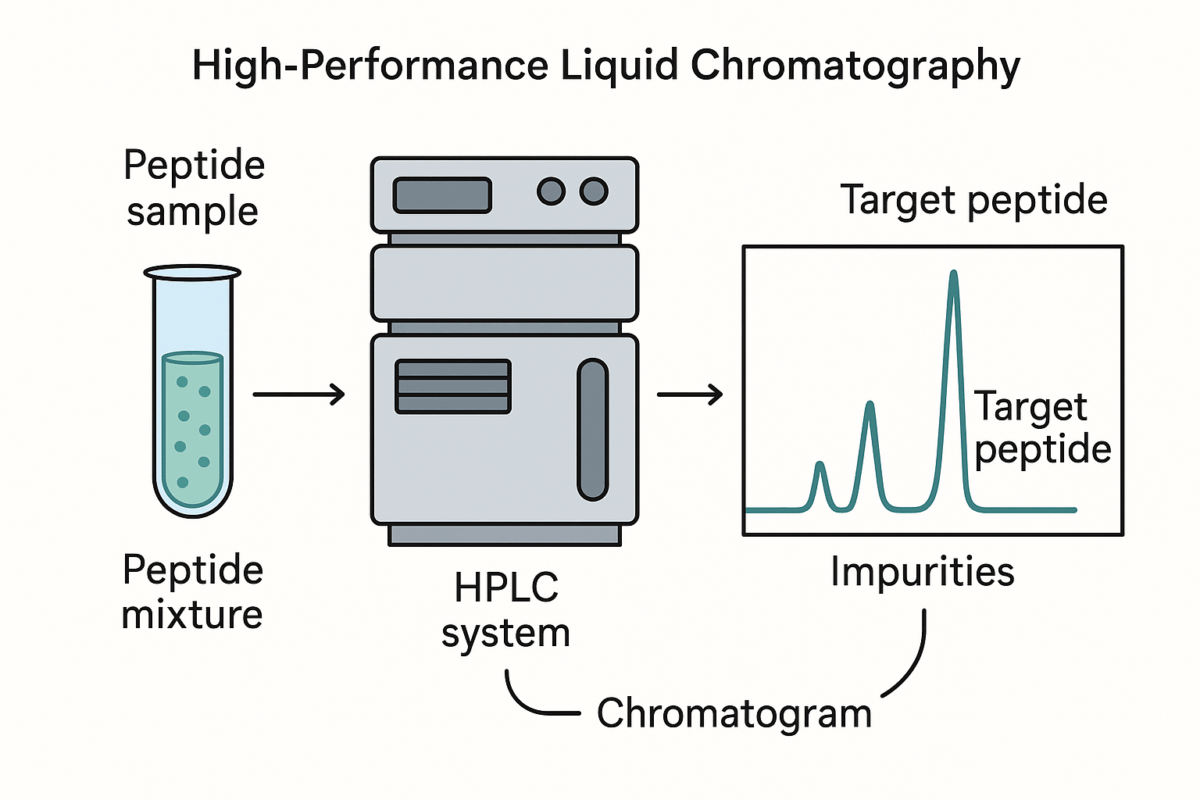
Top-tier labs often report peptide purity well above 95%, frequently ≥ 98-99%, by utilizing advanced HPLC and MS analyses. They also check both resources and ended up peptide vials, which assists capture any pollutants, deterioration items, or solution disparities. This level of extensive evaluation guarantees the peptide's precision-- implying the sequence and pureness are specifically as classified-- which is critical for experimental reproducibility. By validating composition through multiple validated methods, research laboratory recognition guarantees that researchers receive a high-purity peptide that will carry out as expected in the lab. Relied on labs employ proven testing protocols to examine peptide examples and verify their pureness and chemical make-up. A 2016 study released in Nature discovered that greater than 70% of scientists had actually tried and fallen short to reproduce one more scientist's experiments. While peptide purity isn't the only factor, making use of improperly characterized reagents is an acknowledged contributor to irreproducible results. This is why reputable distributors offer both HPLC and MS data on their Certificates of Analysis. As molecules exit the column, they go through a detector-- normally a UV detector readied to 214 or 220 nm, wavelengths where the peptide bond absorbs light strongly. The detector documents how much UV light is soaked up in time, generating a graph called a chromatogram. Purity is the percentage of books in the shipment that have every page printed appropriately, in the best order, without missing phases and no additional pages packed in.
Where Can I Acquire Laboratory Tested Peptides?
Is 95% purity helpful for peptides?
Peptides with an 85% purity degree or higher are generally utilized in enzyme assays or biological task research studies. Peptides with purity more than 95% are superb for quantitative evaluation.
In situation I don't see you, excellent mid-day, excellent evening, and excellent evening. May your tests stay accurate, your peptides stay pure, and your study stay verified. Provided the popularity of compounds reviewed in resources like the semaglutide versus tirzepatide contrast, verification makes certain research study with the desired compound. Collective caution enhances top quality criteria across the marketplace by fulfilling quality vendors and revealing problematic ones. Common screening usually takes 5-7 organization days from sample receipt. Before dedicating significant cash to large quantity purchases, checking an example gives assurance that the mass order will certainly fulfill assumptions. The purity is then measured as the portion of the primary optimal area versus total locations, offering an accurate step of just how pure the peptide is [2] Enhancing HPLC, laboratories use Mass Spectrometry (commonly paired as LC-MS) to confirm the peptide's molecular weight and series identity. Mass spectrometry supplies molecular confirmation by identifying the specific mass of the peptide and any co-eluting species or abbreviated series with high precision. With each other, HPLC and MS information permit experts to verify that the peptide's structure matches what it must be (right Direct-Sarms.com amino acid sequence and anticipated adjustments) and that no significant pollutants are present. Laboratory recognition of peptides is not only a clinical ideal method-- it's often a regulatory need when peptides are utilized in therapeutic growth or clinical study. FDA and the European EMA have actually developed standards mandating thorough analysis and quality control for peptide items to guarantee safety and effectivenessr.
Researchers generally evaluate purity together with various other quality metrics instead of depending exclusively on a single portion.
High-performance fluid chromatography (HPLC) confirms ≥ 99.3% pureness, while mass spectrometry (MS) verifies molecular identity and architectural precision.
Peptide pureness is normally shared as a percent, such as 95% or 98%.
In COA review, it generally includes HPLC purity testing, mass spectrometry identity confirmation, and batch-specific paperwork revealing the tested lot, approach, results, and date.
Scientists depend on precise, confirmed substances to guarantee their searchings for are both legitimate and consistent.
The peptide dose chart thinks affordable purity levels for accurate application.
What Is Peptide Purity Screening?
In concentration-response experiments, these contaminants can shift contours, flatten plateaus, or introduce biphasic habits that obscures the true task of the target substance. Peptides containing methionine or cysteine deposits are susceptible to oxidation. Methionine can be oxidized to methionine sulfoxide; cysteine can form unwanted disulfide bonds or be oxidized to sulfinic or sulfonic acid by-products. These modifications change the peptide's biological task and chromatographic profile. Peptides in microspheres and nanoparticles might ensnare with matrices, making it difficult to separate free and encapsulated kinds. Peptide pureness testing remains one of one of the most crucial tools scientists use to review research study substance top quality. With methods such as HPLC and mass spectrometry, researchers can much better understand peptide structure, verify product identification, and review vendor quality criteria. When combined with Certifications of Analysis and clear paperwork, purity testing aids support informed sourcing choices and lasting research consistency. When evaluating a peptide distributors listing, scientists must prioritize vendors that supply detailed logical information. Business intent for peptides often leads to a market saturated with resellers who may not validate the security of their stock throughout transit. Samples go through independent third-party laboratory verification. High-performance fluid chromatography (HPLC) verifies ≥ 99.3% purity, while mass spectrometry (MS) confirms molecular identification and architectural precision. Reputable measurement methods are vital for quality assurance. Its area about complete peak location determines the reported purity portion. A peptide missing out on one amino acid may show up 99% pure on HPLC since the truncated variation is still the dominant varieties. This is why HPLC alone isn't enough for full verification. Smaller peaks show pollutants, which might consist of trimmed series, removal sequences, or deterioration items.